26official sources checked for this route
37public review signals categorized
2026-08-09latest source date in this view
Labeledpaid hands-on status and affiliate disclosure
Regret map
AI girlfriend app regret map: what people tend to check too late.
This page turns public review signals into pre-pay questions. It does not copy review walls, rank complaints as proof, or claim every user will have the same result.

Illustrative, not official UI.
Build-your-typeStart from the buying moment, then check the risk.
The point is not to deny the pull. It is to check cost, cancellation, refund, privacy, and public signals before the pull turns into payment.
- Visible temptation
- Concrete cost question
- Fast check before checkout
Fast read
The useful signal is the regret pattern, not one dramatic quote.
Read the pattern, then verify the official source and current checkout before paying.
What people check too late
Catch the regret while the decision is still reversible.
This is the pause that makes Companion Cost different from a normal ranking page: name the payment trigger, then check the cost, privacy, refund, or cancellation issue tied to that trigger.
Is it a one-off complaint or a repeatable category?
Use public signals as categories to verify: billing, credits, memory, privacy, support, and cancellation.
Check this firstDoes the same page explain the cost and exit route?
Positive sentiment can be real and still leave cancellation, refund, and privacy questions unanswered.
Check this firstWhich regret pattern matches that app's hook?
Map visual apps to media cost, memory apps to deletion and change risk, and builder apps to annual billing and coins.
Check this firstAfter-pay regret map
What felt tempting before payment, and what later becomes the check.
Use this as a pre-pay map. It is not a claim that every user will regret paying, and it is not a copied review wall.
The first unlock feels smaller than the real bill.
A blurred gallery or private-media tile makes the next credit spend feel like the obvious step.
Trustpilot / High
A recent reviewer praised visual quality but said the extra token system made the subscription feel less satisfying.
Check before paying: Check tokens, top-ups, media limits, renewal, refund wording, and photo privacy before opening checkout.
The checkout can feel easy until the billing detail matters.
A trial, discount, or discreet billing name can reduce friction before the cancellation and refund route is clear.
Trustpilot / High
A reviewer complained about trial billing and merchant-name confusion; the company response pointed to EverAI billing disclosure and token-based media features.
Check before paying: Check merchant naming, renewal timing, cancellation route, and refund limits before relying on a small first price.
When the app feels personal, refund and data control matter more.
Memory, continuity, and late-night conversation can make the subscription feel emotionally easier to justify.
Trustpilot / Low
A reviewer who used Nomi for months said memory and conversation quality had improved, while still noting the subscription is not cheap for occasional use.
Check before paying: Check memory controls, export, deletion, model-change risk, refund policy, and what happens if you stop paying.
The product you pay for may not feel identical later.
Public signals around model changes, filters, support, context drift, or feature limits matter most after attachment.
Trustpilot / High
A reviewer said conversation quality changed, filters interrupted use, and support did not respond adequately.
Check before paying: Check update risk, support path, platform-specific billing, privacy, and account/data deletion before you rely on the app.
Public signals are paraphrased and linked. They are not proof that every user will have the same outcome, and they are not copied review walls.
Pre-pay logic
Do not read public reviews as a verdict.
Use them as a list of things to verify. A complaint may be outdated, app-specific, user-specific, or platform-specific. But repeated categories are useful because they show what buyers wish they had checked sooner.
Token or credit pressure
Cancellation and refund route
Memory or persona changes
Photo upload and private data handling
Support and billing-platform mismatch
Choose the route that matches the trigger
Do not compare apps before you know what made you want to pay.
These routes turn desire into a specific check. Start with the one that matches your buying moment.
 Memory-first
Illustrative, not official UI.
Memory-first
You want it to remember you.
Verify firstUse this route when late-night chat, continuity, and small remembered details make payment feel emotionally reasonable.
current planmemory controlsrefund and deletion
 Locked media
Illustrative, not official UI.
Locked media
You want to unlock the image.
Verify firstUse this route when blurred previews, private media, voice, or video are the reason checkout feels close.
creditsmedia limitsphoto privacy
Build-your-typeIllustrative, not official UI.
Build-your-type
You want to create the exact type.
Verify firstUse this route when look, voice, personality, backstory, or premium customization makes the app feel personal.
annual totalcoinsincluded features
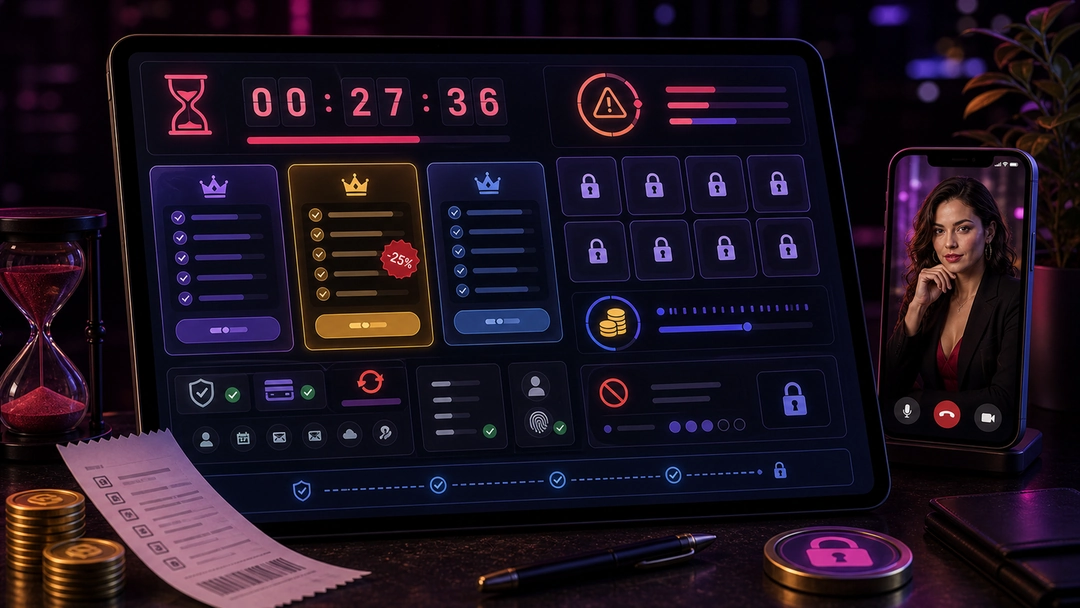 Sale window
Illustrative, not official UI.
Sale window
You saw a discount and feel the clock.
Verify firstUse this route when annual pricing, a promo, or a deadline makes payment feel easier than waiting.
annual totalrenewalrefund limits
 Intro + renewal
Illustrative, not official UI.
Intro + renewal
You finished the character and the first price feels small.
Verify firstUse this route when a discounted first payment, 100 monthly tokens, images, or voice make the Plans page feel like the final step.
second chargetoken burnrefund and maintenance
Fast answers
Questions to settle before paying.
These answers match the visible page guidance and are repeated in structured data for search engines and AI discovery systems.
How should I use public review signals?
Use them as warning categories to verify, not as proof that every user has the same outcome. Then check official pricing, cancellation, refund, and privacy sources.
Why not paste a wall of reviews?
A review wall can be misleading and hard to verify. Companion Cost groups signals into categories and links readers back to checks they can act on.
Should I pay after reading this page?
Do not pay from this page alone. Use it to identify the risk, then verify the current checkout, billing route, cancellation path, refund wording, and privacy controls.
Is this a hands-on review?
No. This is a source-backed pre-pay check using official-source review, public signal categories, and site rules. Paid hands-on test: not completed yet.
Research basis
What this page uses as evidence.
The page is based on official-source checks, public signal categories, competitor pattern research, and purchase-psychology research. It is not a fake personal review.
Evidence note
The map is based on categorized Public Review Signals and official-source checks already tracked by Companion Cost.
Evidence note
Review text is paraphrased and linked. It is not copied into a testimonial wall.
Some links may be affiliate links. Scores do not depend on commission rate.
Browse this cluster
Keep the check connected.
A single page rarely covers the whole decision. Move through the related guide, tool, comparison, and signal routes before opening checkout.
Public Review Signals
Short categorized signals with source links, not bulk-republished reviews.
Browse all guidesStart from hidden costs, locked photos, AI sexting cost, credits, refunds, private uploads, or cancellation.
MethodologyHow Companion Cost separates official facts, public signals, and interpretation.
Take the 60-second checkGet a next-step route based on your cost, privacy, and feature tradeoffs.